
Stretch 4 at home? What the new NIH study establishes
Stretch 4 funding supports research into help at home. The actual dates, availability for individuals and results still to be demonstrated.
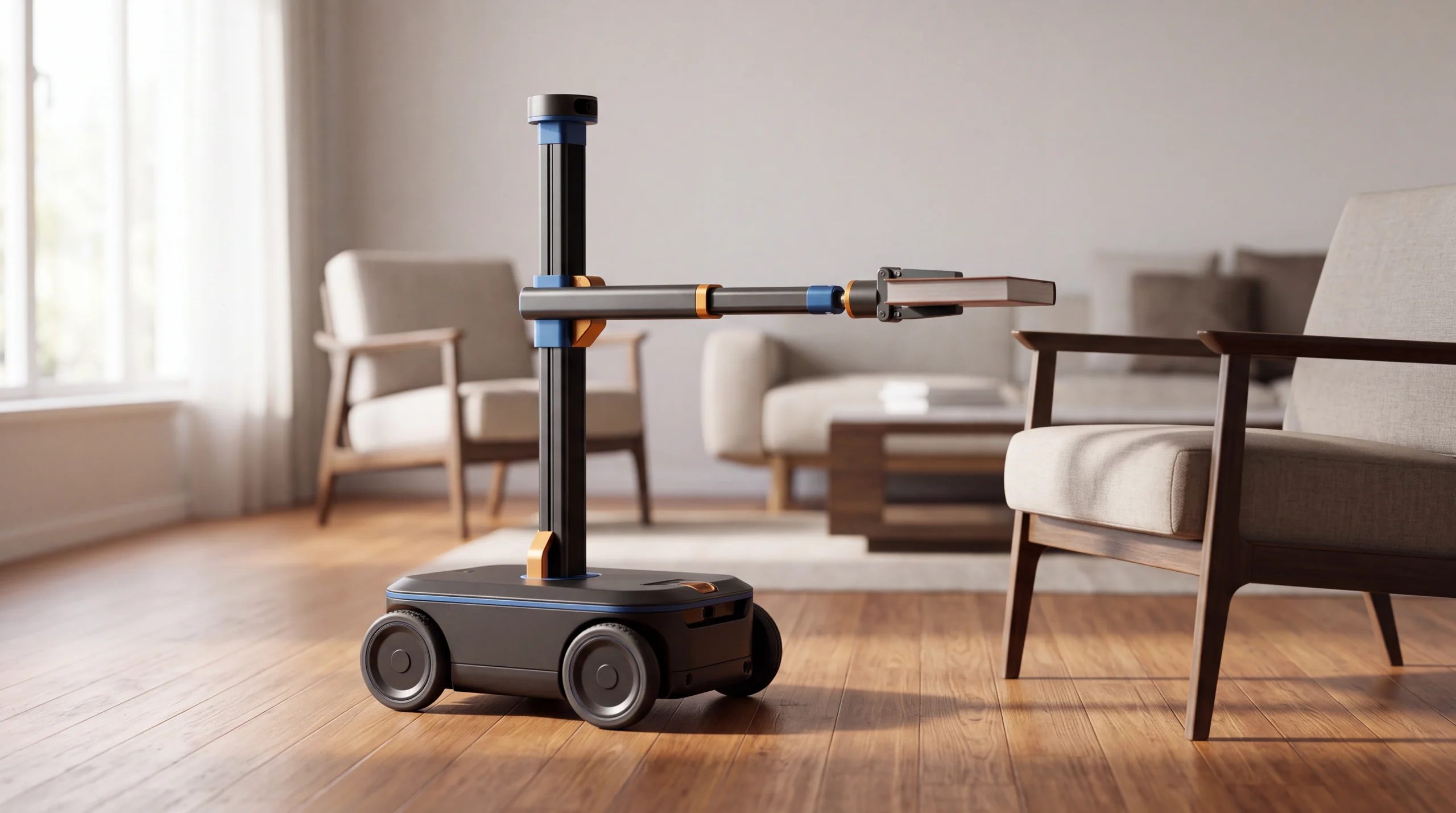
A robot that can help with everyday activities already sounds like a practical answer for many families. The case of Stretch 4, from Hello Robot, calls for a precise reading, however: the funding announced on 29 September 2026 concerns research into assistance at home; it does not certify an autonomous assistant ready for individual use. This is a recent documented development, revisited here on 17 October, rather than news of something that happened yesterday.
What has been funded
Hello Robot announced almost $3 million over three years for a new phase of research with the University of Illinois Urbana-Champaign, supported by the US National Institutes of Health’s National Institute on Aging. The announcement gives 22 September as the start of the new phase. The NIH register confirms the project and distinguishes this phase from the programme’s earlier history; its expected end is May 2029.
The setting is the United States, with initial work at the university’s LIFE Home in Champaign, Illinois. Stretch 4 is a mobile manipulator: a wheeled base, an upright column and a telescoping arm, rather than a walking humanoid. The work will investigate possible assistance with routines, interactions and organising activities for older people with cognitive difficulties and those who support them. The university laboratory confirms the funding; Robot Harbour published an independent analysis on 4 October, without presenting it as a completed clinical evaluation.
Announcement, evaluation and availability are different things
| Information | What we can conclude |
|---|---|
| Registered and announced funding | A research programme exists; not all the promised benefits have already been demonstrated |
| Evaluations in homes and care settings | Real-world use will be studied; a demonstration does not describe every home |
| Official Stretch Assist page | As of 17 October, the manufacturer says Stretch 4 is not yet on sale for individual use |
| Pilot programme | Selective participation and collaboration with the team; this is not equivalent to an order with guaranteed delivery |
The useful point is sustained evaluation: how often an activity succeeds, when a person is needed and which problems emerge with repeated use. Reliability and acceptance are among the research questions. Funding alone cannot establish certain savings for a family, a demonstrated reduction in caregiving work or safety in every situation.
Practical questions to ask before choosing
For a family, “helps at home” is too broad a description. It is better to start with one specific activity, the environment in which it must happen and the person who will use the controls. Asking whether the assistance requires continuous supervision, how to stop a movement and who intervenes when the system stops makes a future assessment more useful than a list of functions.
Training, maintenance, spare parts, local support and data handling also need clarification. These are criteria to verify with the supplier, rather than features we automatically attribute to Stretch 4. The cost of a platform intended for research is not the final cost of a domestic service: configuration, support and terms of use can change the picture. We give no price or availability for Italian families here, because these sources do not establish them.
Before comparing products, also distinguish companionship from practical assistance: a robot that entertains and a system that manipulates objects meet different needs. The ROBOLERO catalogue helps readers navigate the categories; the guide to apps, Wi-Fi and cloud services gathers further questions to ask about connected services. For a product already owned, the ROBOLERO valuation remains a separate tool from choosing an assistive solution.
What to look for in future results
The interesting development is that the project focuses on everyday use that still needs to be evaluated. The next useful data will concern completed activities, human interventions, continuity of use and observed limits. Until then, Stretch 4 should be described in the context of its study and pilot programme, without turning a funded objective into a guaranteed capability.
Sources
- NIH RePORTER — progetto 2R44AG072982-04A1, registro ufficiale reporter.nih.gov
- Hello Robot — annuncio del finanziamento, 29 settembre 2026 businesswire.com
- University of Illinois — Stretching their Reach hfaging.ahs.illinois.edu
- Robot Harbour — copertura indipendente, 4 ottobre 2026 robotharbour.com
- Hello Robot — Stretch Assist e disponibilità individuale hello-robot.com
Comparison based on the cited sources. Specifications, prices and availability may change: check the exact version and final cost before buying.