
A robot that feels and remembers? What NEURA's Neuron AI announcement means
NEURA announced Neuron AI on October 14, combining vision, touch, sound and memory. What is known, what remains a claim and what it means for home robots.
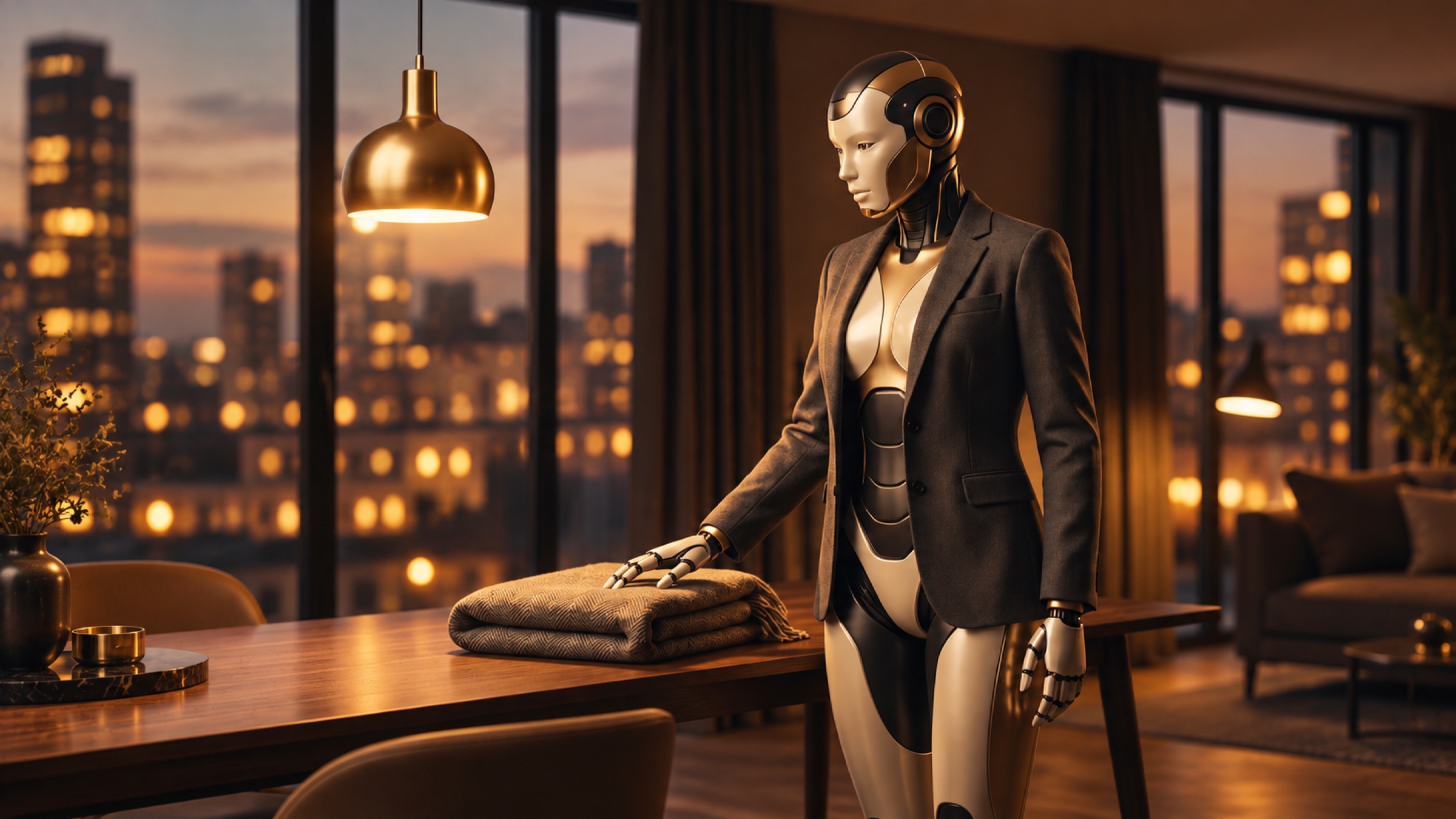
A robot can see a shirt on a table. Can it feel whether it has gripped it, remember where it put it and hear whether a mechanism has closed? That is the question behind Neuron AI, announced by NEURA Robotics in Metzingen, Germany, on October 14, 2026. The company says it combines 3D vision, touch, audio, robot state, language and memory to guide physical actions. The announcement is real; performance in an ordinary home remains unproven.
What was announced
NEURA introduced Neuron AI as a physical-AI model intended for several robots in its range. EU-Startups independently reported the launch. According to NEURA, training combines real robot data, simulations and human demonstrations. The goal is to teach skills and deploy them across different machines. This was not the launch of a new home robot that consumers can buy today.
The distinction matters. The most concrete public demonstration is scheduled for October 20–22 at NVIDIA GTC Berlin. NEURA plans for its 4NE1 humanoid to perform an eleven-minute laundry sequence involving a washing machine and dryer without human intervention. It has not happened yet. When it does, viewers should examine continuity, how the room and objects were prepared, and whether the result can be repeated. For now, this is the manufacturer's plan, not an independently completed test.
Why touch and memory matter
A camera can see an object's shape but cannot alone measure grip pressure. A microphone might detect a latch clicking outside the camera's view. Memory helps preserve context when an object is hidden. These are practical challenges for folding fabric, opening a cupboard or handling fragile items.
NEURA says Neuron AI combines these signals and can run on the robot without sending every decision to the cloud. Those are company descriptions. We have not found independent public measurements of accuracy, safety, endurance or cost for household use.
What it means for buyers
For a private buyer, nothing new is available to purchase today. The useful milestone would be evidence that a robot can complete long, variable tasks reliably: how often it succeeds, how long it takes, what happens when an object moves and whether a person can stop it safely. One polished demonstration would not answer all of that.
If you are choosing a robot now, compare the functions the product actually offers, support in your country and included accessories. If you already own one, ROBOLERO's used-robot valuation is a starting point; a future AI announcement does not guarantee an upgrade to an existing model.
Sources
- NEURA Robotics — official announcement, October 14, 2026 neura-robotics.com
- EU-Startups — independent report, October 14, 2026 eu-startups.com
- NEURA Robotics — Neuron AI technical overview neura-robotics.com
Comparison based on the cited sources. Specifications, prices and availability may change: check the exact version and final cost before buying.