
Dream-1 launches through an API: controlling different robots does not mean a home assistant is ready
Dream Labs launches Dream-1 to control robot arms through an API: what the evidence shows, its limits, and what it means for buyers.
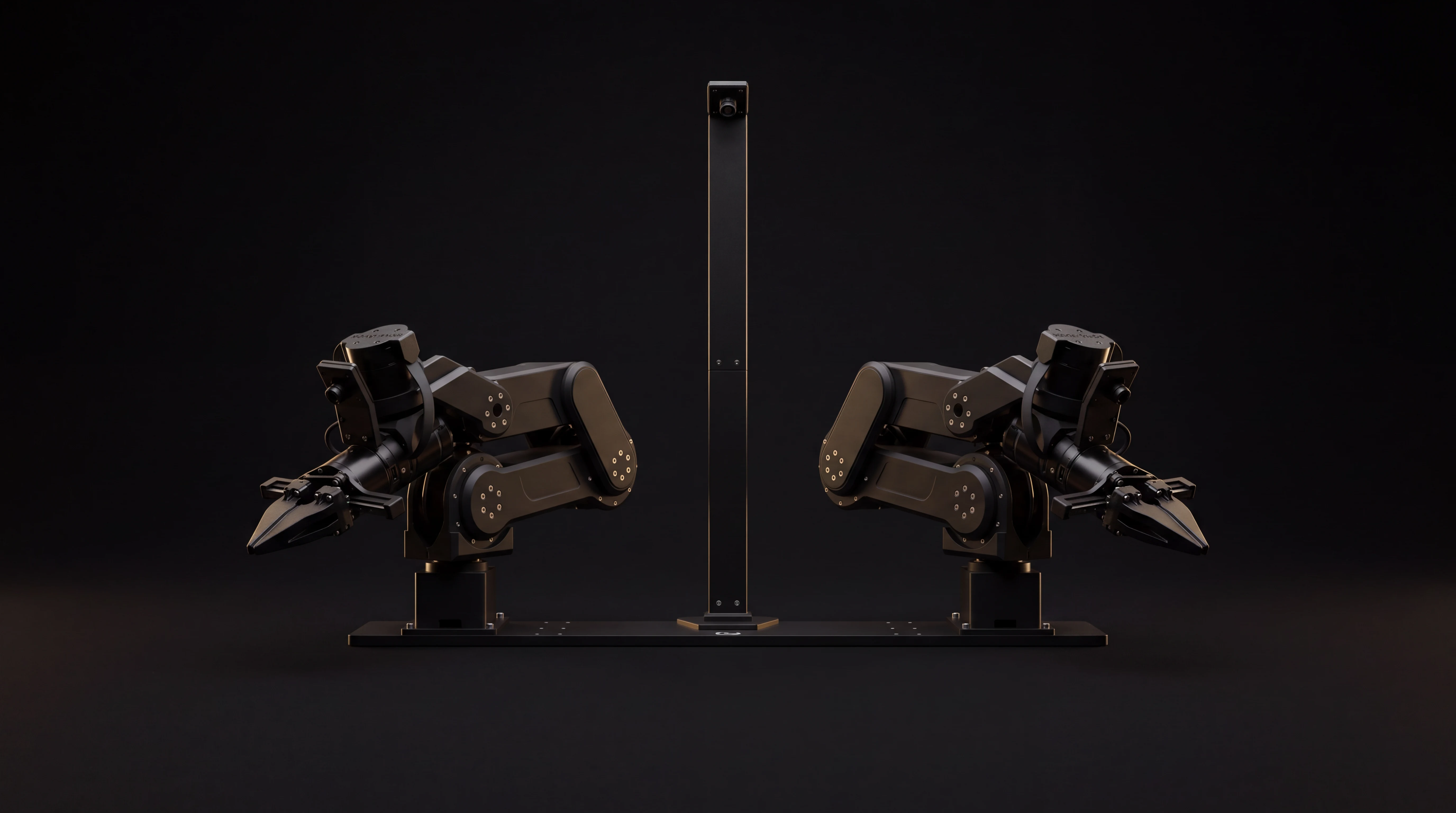
On 19 October 2026, Dream Labs publicly launched Dream-1 and the Dream API, a software service that guides robots using camera images and natural-language instructions. The release date also appears in Robocurve's evaluation; Forbes covered the announcement that day. The development concerns transferring capabilities between different machines: it is interesting for people following home robotics, but remains a research beta, rather than a complete robot ready to work in a home.
What it actually controls
Dream Labs describes Dream-1 as a World Action Model, a model connecting predictions about a scene to a robot's actions. The system uses images from three cameras, one central camera and two at the wrists, to produce instructions for gripper position and opening. A component of the control system must then convert these into joint movements.
The company claims zero-shot transfer to robots with two arms and parallel grippers: in the specified experiments, no data specific to that robot was used to adapt the model. This does not mean no training, universal compatibility or guaranteed household capabilities. The 27 robots in the simulation evaluation are not 27 physical machines tested in homes.
Independent evidence, within a defined scope
Robocurve reports a mean score of 59.3% for Dream-1 on RoboDojo-RC Tier 1, with 120 attempts per configuration. That result applies to that protocol and its conditions, rather than being a success rate for every household chore. Additional performance results and demonstrations published by Dream Labs remain findings attributed to the developer; some galleries show selected, accelerated runs.
MakerMods provides a concrete hardware example: its Maker Arm page shows two arms guided by Dream-1. The starting price of $999 is for a single arm kit; the page lists shipping in November. It is not the cost of a complete home assistant that is already available.
What the software costs
When checked on 20 October, the official page listed $3 per operating hour for Dream-1 and $2 for Dream-1-flash. Forbes instead reports $0.75 for the smaller version: the sources disagree. To assess spending, check the actual tariff in the service rather than treating the article's headline as a quotation. Hardware, integration and supervision remain separate costs.
Why it matters to an individual buyer
Reducing the adaptation needed between robots could make experiments with laboratory or maker arms more accessible. Before buying, however, documented compatibility, a safe workspace and clarity about camera data sent to the remote service are necessary. Dream Labs warns that the model can make mistakes and has not been validated for safety-critical uses. A successful demonstration does not establish reliable operation around people, animals or fragile objects.
For orientation, compare machines in the robot catalogue and the criteria in our guide to humanoid robots for the home. The useful step today is to understand what has been verified on your hardware before expecting an autonomous helper.
Sources
Sources
- Dream Labs, Dream-1 release and limitations dreamlabs.ai
- RoboCurve, independent bounded RoboDojo-RC evaluation robocurve.org
- MakerMods, Maker Arm hardware and Dream-1 integration makermods.ai
Comparison based on the cited sources. Specifications, prices and availability may change: check the exact version and final cost before buying.