
Go2 Battery: Handling and Transportation Precautions
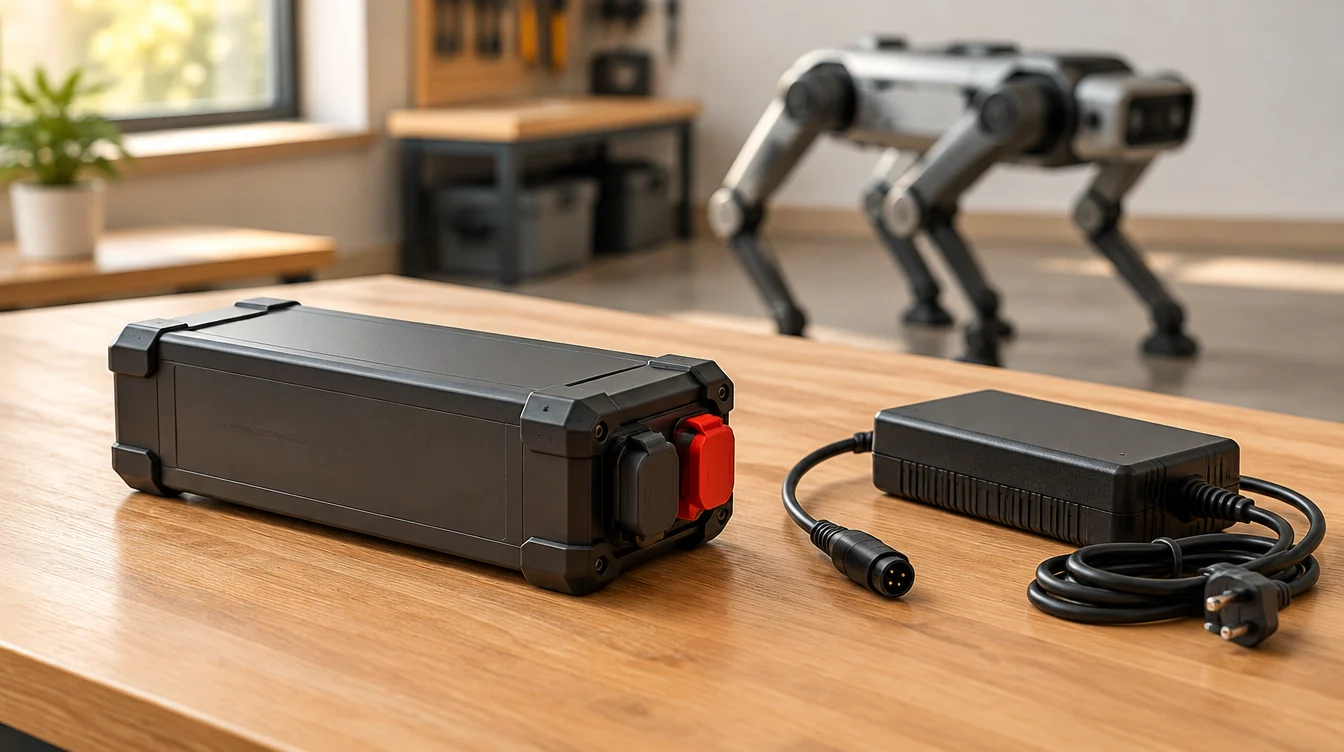
The battery represents a crucial component for the Unitree Go2 quadruped robot, with its proper use impacting both safety and durability. This article summarizes the official recommendations extracted from the Unitree manual, comparing them with the manufacturer’s battery datasheet. The manual is hosted on ManualsLib, which provides access without acting as an independent verification. This serves as a documentary guide, not a performance test.
Types of Battery for Unitree Go2
Before applying any procedure, identify the battery actually installed and the corresponding charger. The datasheet on the Unitree shop shows the options for Go2, but confirmation of correspondence with the specific unit and manual revision should be verified with the manufacturer. Compatibility or usage conditions should not be inferred solely from the robot’s name.
Transportation Instructions
The Unitree User Manual (page 10, available on ManualsLib) specifies particular precautions for battery handling during transport:
- Do not transport batteries that are visibly damaged, swollen, or compromised.
- Before transport, discharge the battery to about 65% charge according to that manual revision. This information does not authorize improvised discharging procedures nor substitute carrier conditions.
- Avoid direct contact between the battery and metallic objects such as watches, glasses, or jewelry to prevent short circuits.
- Always verify the regulations of the involved carrier, especially for air transport, since the examined sources do not confirm admissibility on aircraft. Inform the carrier of the model, capacity in Wh, and required documentation before planning travel.
These manual instructions do not constitute authorization for transport nor alone guarantee compliance with applicable rules.
Long-Term Storage and Maintenance
Lithium-ion batteries require specific care during prolonged disuse, per Unitree’s indications:
- Avoid storing the battery completely discharged to prevent irreversible damage from over-discharge.
- Before long storage, if the charge is below 30%, recharge to around 70%.
- Store in a dry, ventilated environment, avoiding temperatures above 40 °C and direct heat sources.
- Perform periodic checks on the charge level to prevent deterioration.
These practices align with established standards for lithium-ion battery management.
Behaviors to Avoid
To reduce risks, observe instructions applicable to the specific version:
- Do not open or dismantle the battery, nor attempt home repairs; for faults or uncertainties, contact Unitree support.
- Do not use damaged batteries or those subjected to impacts without authorized technical inspection.
- In presence of deformation, swelling, contamination, or other damage indicators, dispose of them at authorized centers, observing local hazardous waste regulations.
The manual requires not reusing damaged batteries. For collection or pick-up, request instructions from local services and support before moving a compromised battery.
Summary of Unitree Recommendations for Go2 Battery
| Recommended Actions | Behaviors to Avoid |
|---|---|
| Discharge to about 65% before transport | Do not transport damaged or swollen batteries |
| Recharge to about 70% if below 30% for storage | Do not leave the battery fully discharged long-term |
| Store below 40 °C in dry, ventilated environment | Do not expose to high temperatures or direct heat |
| Avoid contact with metallic objects | Do not open or modify the battery |
| Periodically check charge level | Do not use batteries after impacts without check |
Frequently Asked Questions
1. Can the Go2 battery be transported by plane? It is necessary to contact the airline or carrier to verify restrictions and obtain any authorizations, without interpreting the manual’s indicated charge percentage as boarding permission.
2. What are the ideal environmental conditions for charging? A stable, moderate temperature environment is suggested, avoiding too hot or cold surroundings to preserve battery integrity.
3. How to act when facing a damaged battery? Do not use it and proceed with disposal at authorized collection centers, respecting local hazardous waste regulations.
Conclusions
Caring for the Unitree Go2 battery by following official recommendations for storage and transport is essential for robot safety and functionality. The Unitree manual’s instructions, combined with general good practices for lithium-ion batteries, still require verifying the correct revision and do not eliminate the risks inherent to battery management. For further technical information and quadruped robot guides, refer to the robot catalog and practical guides available on ROBOLERO.
Sources:
- Official Unitree Go2 manual, page 10: ManualsLib
- Unitree Go2 battery product sheet: Shopify Unitree